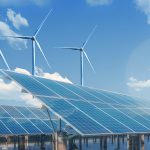
The Special Plan for the Construction of New Power Systems during the 15th Five-Year Plan clearly puts forward the comprehensive promotion of the integrated energy model integrating new energy, hydrogen energy and long-duration energy storage. Newly built industrial parks, mining industrial zones and off-grid island areas across the country have incorporated wind-solar-hydrogen-storage integrated systems as mandatory planning requirements. Conventional lithium battery energy storage carries risks of thermal runaway and boasts a short cycle life, failing to meet long-duration peak shaving demands. By contrast, zinc-nickel and vanadium flow batteries feature intrinsic safety and an ultra-long cycle life of over 10,000 times, making them the preferred solution for grid-side and large-scale industrial & commercial energy storage projects. The coordinated development of energy storage and hydrogen energy will serve as the core development direction of the future energy system.
Conventional lithium iron phosphate batteries only have a cycle life of 3,000 to 5,000 times. Under frequent peak-valley charge-discharge conditions, mass replacement is required within 3 to 5 years. In addition, their organic electrolytes pose severe fire and explosion hazards, leading to extremely high management costs for densely populated industrial parks and large grid-side power stations. Zinc-nickel air flow batteries contain no flammable organic media, eliminating thermal runaway risks at the material level with a charge-discharge cycle count exceeding 10,000 times. They are ideal for long-cycle industrial and commercial arbitrage as well as grid peak shaving scenarios that require daily repeated cycling. The system supports unlimited modular parallel connection, enabling the construction of large-scale GWh-level energy storage stations, with a significantly lower full-lifecycle comprehensive operating cost compared to lithium-ion energy storage.
The wind-solar-hydrogen integrated operation model delivers unique industrial value: surplus electricity generated by photovoltaic and wind power during daytime is stored in flow batteries, which power PEM electrolyzers to produce green hydrogen during off-peak hours. Fuel cells generate electricity to supplement grid loads during industrial and commercial peak power demand, realizing self-sufficient energy supply for industrial parks and drastically cutting enterprises’ high peak electricity costs while achieving zero-carbon transformation of the plant area. The number of filed wind-solar-hydrogen-storage integrated energy projects surged by 220% year-on-year in the first half of 2026, with local governments offering multiple preferential policies covering land, energy consumption and fiscal support for such integrated projects.
From the perspective of market competition, manufacturers that only supply standalone energy storage batteries cannot match upstream hydrogen production and downstream power equipment. Enterprises with self-developed full industrial chains covering long-duration flow batteries, PEM electrolyzers and fuel cells can provide turnkey integrated energy EPC solutions, possessing irreplaceable comprehensive advantages in tenders for industrial parks, mines and island projects. Competition for integrated energy projects will no longer focus solely on the parameters of energy storage equipment. Instead, full-chain collaborative design and integrated delivery capacity covering hydrogen production, energy storage and power generation will become core evaluation criteria, and domestic enterprises with independent R&D strengths in both energy storage and hydrogen sectors will enjoy continuous market expansion.